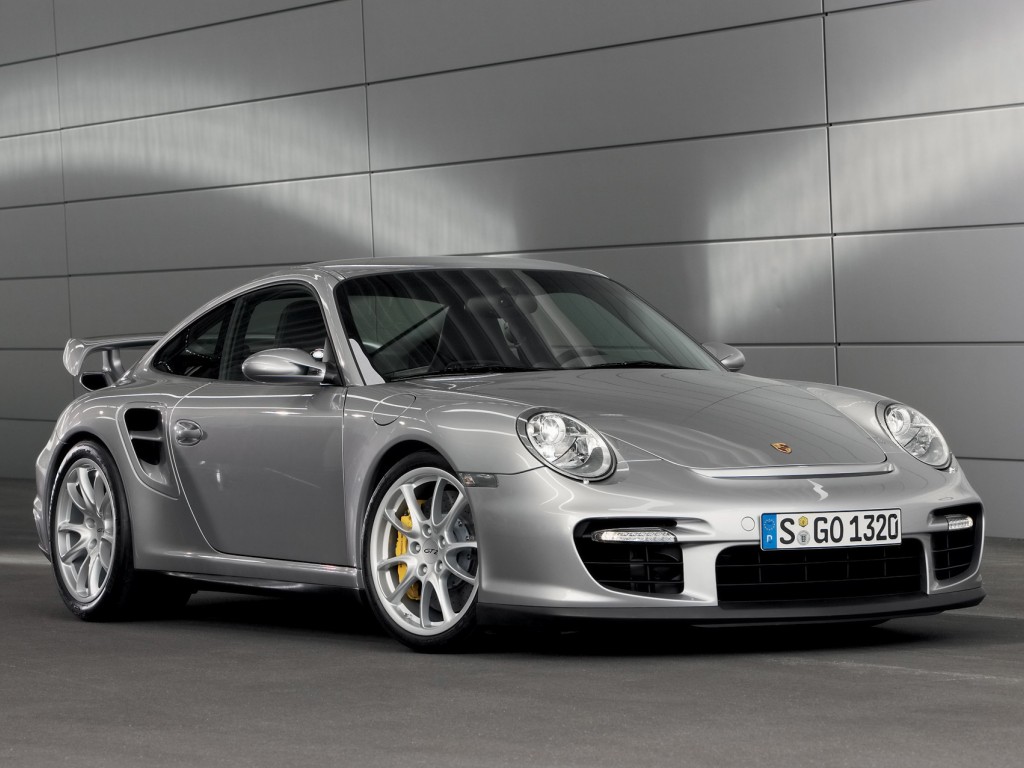
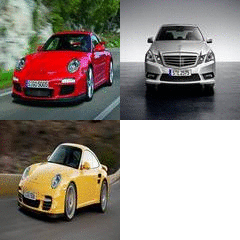
The Porsche 911 GT3 Cup race car is designed by the same team based in Weissach, near Stuttgart, Germany, responsible for the iconic Porsche 911 GT3 and RS road cars. This race car tips the scales at 1,200 kg, resulting in even sharper performance on the circuit.
|
|
|---|
New Porsche 911 GT3 Cup White Series
The Porsche 911 GT3 Cup race car is designed by the same team based in Weissach, near Stuttgart, Germany, responsible for the iconic Porsche 911 GT3 and RS road cars. This race car tips the scales at 1,200 kg, resulting in even sharper performance on the circuit.
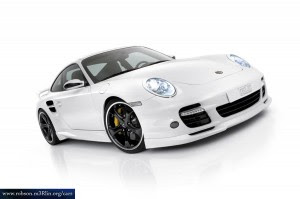
Concept Car 2006 Porsche 911 Turbo 997 with TechArt Tuning
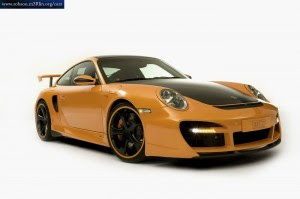
World Debut at the ESSEN-MOTOR-SHOW 2006. Porsche 911 Turbo 997 with TechArt Tuning review:TechArt Tuning for the new Porsche 911 Turbo 580 hp / 427 kW, 0 / 100 km/h in 3.46 Seconds, 339 km/h V/max. Maximum performance paired with optimized aerodynamics: TechArt Automobildesign turns the new Porsche 911 Turbo into one of the world’s fastest and most powerful street-legal sports cars. 580 hp / 427 kW, 0 / 100 km/h in 3.46 seconds only and a maximum speed of 339 km/h are the most important performance figures of this car.
Beautiful Design Car Porsche 911 Turbo 997 with TechArt Tuning
The TechArt VarioPlus coil-over suspension is available for the electronically adjustable PASM damper system of the new Turbo. This chassis offers not only an individually adjustable ride height by up to 25 millimeters, but also selectable ‘Normal’ and ‘Sport’ damper settings at the push of a button on the dashboard. However, the settings are not limited to these presets. Both settings automatically firm up their damper rates during sporty driving. The result is an optimal symbiosis of excellent ride comfort during leisurely driving and agile, highly responsive handling during fast cornering. As a world-renowned specialist for exclusive interior creations TechArt Automobil design also offers individual interiors for the latest 911 top-of-the-line version in all colors and designs. The 580 hp / 427 kW Turbo was upgraded with an exclusive TechArt CarboBlack leather trim, white cockpit panels matching the car’s outside color and further sporty accessories. They include an ergonomically shaped airbag sport steering wheel, foot pedals, foot rest and shift knob all made from aluminum as well as stainless-steel sill plates with TechArt logo.
Water cooled six-cylinder boxer twin-turbo engine with TechArt performance tuning consisting of 2 special turbochargers with variable turbine geometry, sports air filter, TechArt stainless steel high performance exhaust system with special manifolds and steel-bed high performance catalysts and a recalibrated ECU. TechArt engine design package. Displacement 3,600 cm
Bore x stroke 100 x 76.4 mm
Max. power 580 hp / 427 kW at 6,000 rpm
Max. torque 700 Nm at 4,850 rpm (from 3,200 / 6,000 rpm permanently more than 670 Nm)
Compression-ratio 9.0:1
Max. boost 1.2 bar
Max. revs 7,100 rpm
Power output per liter 161.11 hp per liter capacity Permanent four-wheel drive
Six-speed manual gearbox with modified transmission-ratios in 5th and 6th speed, TechArt gearshift travel shortage and additional gearbox-oil cooling Gear ratios:
1st speed 3.82
2nd speed 2.14
3rd speed 1.48
4th speed 1.18
5th speed 0.92
6th speed 0.75 Axle ratio 3.44 TechArt VarioPlus coil-over sport suspension TechArt Formula light alloy wheels, one-piece, 8.5Jx20 in front with 245/30 R 20 ContiSportContact3 tires, 12Jx20 in rear with 325/25 R 20 tires. Standard Porsche Ceramic Composite Brake
Front: 380 mm discs and 6-pot aluminum Monobloc fixed calipers
Rear: 350 mm discs and 4-pot aluminum Monobloc fixed calipers Bodywork:
2+2 seater coupe with TechArt body styling kit I, consisting of: front spoiler I, side skirts, side mirror moldings, rear spoiler I, roof spoiler, rear diffuser, headlight moldings
Length 4,450 mm
Width 1,852 mm
Height 1,300 mm
Wheel-base 2,350 mm
Tank capacity 67 liters
Curb weight 1,592 kg
Weight/power ratio 2.74 kg / hp Performances:
Acceleration: 0/100 km/h: 3.46 s
Maximum speed: 339 km/h Retail price: about 200,000 Euros
End of Porsche 911 Turbo 997 with TechArt Tuning review.
These performance figures make greatest demands on perfectly balanced aerodynamics. The TechArt designers developed bodywork components in the wind tunnel which don’t only give the 911 Turbo its distinctive look but especially optimal aerodynamic downforce and a drag coefficient reduced by 4 percent. The TechArt front spoiler reduces aerodynamic lift by 15 percent. They also moulded a new wing profile for the retractable production rear spoiler which produces 20 percent extra downforce in conjunction with the TechArt rear diffuser. The understated TechArt roof spoiler visually stretches the roofline. The TechArt side sills give the 911 top-of-the-line model a longer, sleeker look. The side mirrors can be attractively upgraded using the TechArt mirror moldings. The look is rounded out with moldings for the headlights. Especially for the new Porsche 911 Turbo they developed the striking TechArt Formula five-spoke wheels in size 8.5Jx20 in front and in size 12Jx20 on the rear axle. TechArt recommends ContiSportContact 3 tires in sizes 245/30 ZR 20 and 325/25 ZR 20 for mounting on these wheels.
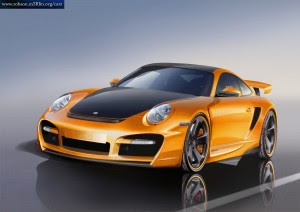
Concept car Porsche 911 Turbo TechArt GTstreet Model 997
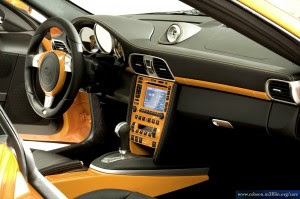
The cockpit of the TechArt GTstreet also differs distinctly from the stock 911 Turbo. Among the differences is an exclusive leather interior with color-contrasted stitching and sporty CarboBlack highlights. The coupe is further equipped with an ergonomically shaped TechArt sport steering wheel, aluminum foot pedals, foot rest and shifter, as well as with illuminated door sills sporting the TechArt logo.
German TechArt studio will present in Geneva its latest tire-burner based on the current Porsche 911 Turbo 997 series super-coupe. While most tuners focus their efforts on eye-popping exterior enhancements, TechArt’s engineers have centered their attention
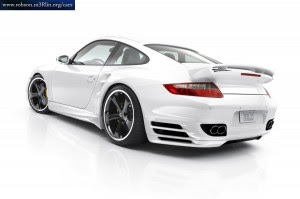
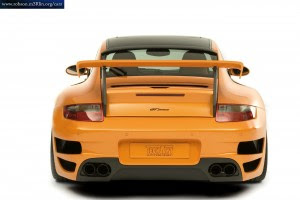
Porsche 911 Turbo TechArt on Back BodyThe TechArt GTstreet rear fascia with integrated carbon-fiber diffuser contributes to the strong downforce generated on the rear axle. It also provides the perfect backdrop for the quad exhaust of the TechArt high-performance exhaust system. TechArt Automobildesign offers a number of versions of its popular Formula wheel in sizes 8.5Jx20 in front and 12Jx20 on the rear axle. GTstreet buyers can choose from several color combinations and between the one-piece Formula and the multi-piece Formula II designs. The Formula II wheel features an exchangeable wheel lip. For optimal tires TechArt chose ContiSportContact 3 high-performance tires in sizes 245/30 ZR20 and 325/25 ZR20. The large 20-inch wheels also provide the necessary space for the especially powerful and durable TechArt high-performance brake system. It features six-piston aluminum fixed calipers and 390-millimeter discs on the front axle. The rear axle is fitted with 365-millimeter discs and four-piston fixed calipers. The TechArt GTstreet comes with a TechArt VarioPlus coil-over suspension that is based on the electronically adjustable PASM damping system of the 911 Turbo. This chassis allows individual ride-height lowering by up to 25 millimeters and push-button selection of two different damper settings, “Normal” or “Sport.” However, the dampers are not limited to these presets. Sporty driving automatically results in firmer damper settings in both modes, thus combining excellent ride comfort during normal driving with agile and responsive handling during fast cornering.
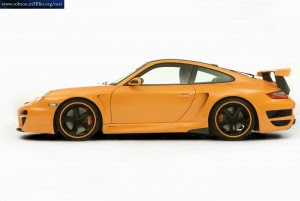
The body kit for the TechArt GTstreet was created in the wind tunnel, and offers an optimal symbiosis of aerodynamic down force, minimized drag and striking design. The front fascia of the GTstreet with retractable carbon-fiber splitter produces down force on the front axle and provides radiator, oil coolers and brakes with more cooling air, thanks to its large, striking air inlets. The auxiliary headlamp units with daytime running lights and fog lamps improve active safety. They also give the car even more passing clout. The TechArt GTstreet fender flares on the front axle add 10 mm to the two-door’s width and give it an even more dynamic appearance. But that’s not all: The air outlets behind the front wheel houses optimize brake venting. The larger air ducts in the rear sidewalls provide engine and inter coolers with a larger supply of cooling air. For an optimal transition between front and rear fenders the TechArt designers have developed rocker panels that complement the new contours. TechArt mirror and headlamp moldings provide the finishing touches. The TechArt roof spoiler extends the roof line and optimizes airflow to the adjustable rear airfoil of the GTstreet.
2010 PORSCHE 911 GT3 R PICTURES MODIFIED
Like the 911 GT3 Cup and 911 GT3 RSR, the Porsche 911 GT3 R is designed and built by the Porsche Motorsport Department at the company's Weissach Development Centre. First deliveries to customer teams around the world begin in the spring, and the base price of the Porsche 911 GT3 R is 279,000 Euros plus local sales tax/VAT
Download and upload file to internet
Porsche Cayenne GTS 2009

The V-8 Cayenne sprouts a six-speed stick and actually ups the fun factor.
Just a blink back, the 21st century arrived, and a lot of people were wondering if someone had slipped a little acid into Porsche’s breakfast cereal. Excuse me? Who, exactly, is willing to pay a lot of money for a Porsche sport-utility vehicle?
The laughter has died way down. The Cayenne SUV is now Porsche’s bestselling vehicle, accounting for about a third of all sales: exactly 10,061 of a total 29,140 Porsches sold in the U.S. through October 2007. Porsche says it’s making all the Cayennes it can, 180 a day.

The Fourth in a Bestselling Lineup
When the fish are biting, you want to take advantage, and that’s why Porsche has been churning out new variations of the Cayenne. There are now four of them. The base Cayenne, with a 290-hp V-6, goes for $44,295. Sporting an updated 385-hp V-8, the Cayenne S starts at $58,795. The monster Cayenne Turbo, with a 500-hp twin-turbo V-8, checks in at an eye-crossing $94,595. That left one slot for a fourth model, the $70,195, 405-hp GTS you see here, which goes on sale in February.
Like all Porsches, the Cayennes have long options lists intended to give the automaker the greatest per-car profit. Mission accomplished. It’s ridiculous. What car company sells fewer than 100,000 vehicles per year worldwide and makes a pretax profit of $8.5 billion (helped along by a $759 million reevaluation of its 22-percent stake in Volkswagen)?

That’s Right, a Proper Manual Transmission in a 405-hp SUV
Move in closer. What really makes this newest Cayenne particularly interesting is that Porsche has seen fit to arm the 5300-pound truck with a six-speed manual gearbox—something apparently no other V-8–powered sport-ute maker thinks is a wise idea. So in early November, we arrived in southern Portugal to see if a two-and-a-half-ton truck and a six-speed manual make sense.
The first thing that makes the manual an entertaining idea is that there are 405 horsepower and 369 pound-feet of torque on one end of it. That’s a 20-hp premium over the output in the same-size V-8 in the step-down Cayenne S. Imagine the wrinkled brows and clucking tongues of all those Porsche engineers: That’s a horsepower-to-weight ratio of about 13 pounds per, compared with the crushingly fast Turbo’s rate of 11.3 per horsepower. The only thing that materializes to us as competition is a supercharged Range Rover, which boasts an even 400 horsepower and a $93,600 sticker, or if you have a sense of humor, a 393-hp Hummer H2 that is stuck lugging around almost 17 pounds per horsie.

Get This: It’s Actually a Hoot to Drive
In addition to the horsepower boost, the GTS gets huge footprints (21-inch wheels and tires are standard), permanent all-wheel drive, and all sorts of anti-roll chassis voodoo and stability control—it’s there to keep this truck from behaving like a big goofy, slobbering truck. And that’s just what it does. At that point, the only thing missing is some high-school kid’s idea of very loud pipes. That, and a 4.1:1 axle ratio. Funny you should ask: The GTS has both.
When you climb aboard, the Cayenne’s seat and layout tell you you’re not occupying someone’s dining-room chair. There are various damper settings to choose from, with the car hunkering down and tightening up in three stages. Push the sport button, and amusingly, the clearly hot-dog rap of the dual exhausts gets louder—majorly loud—causing a kind of giggling frenzy in the cabin as if you’d been transported back to your last cafeteria food fight. They are about the rudest bad-boy pipes we can recall in years, if you don’t count a Viper’s ridiculous yowling.
Team that exhaust note with this truck’s volatile current of evenly delivered power—it just surges all over the power band—on some mostly empty roller-coaster countryside that shows no sign of uniformed authorities in the weeds, and the effect is exhilarating and hypnotizing, and it makes your cheeks tingle. It’s as if you should be wearing a big orange hat with the word “FUN” on the front. It’s not an idle claim when Porsche boasts that this is unlike any other SUV. It is. Given a little time, we could probably identify a handful of prominent sports cars this brute would blow by.

With the shorter rear end, first gear gets gobbled up quickly during tire-yelping starts, but the moment the clublike shifter clicks crisply into second, the thrust is superbly impressive. But the force always comes on in a controlled, fluid manner, so there’s no squirrelly behavior.
The Cayenne GTS is easy to drive, and easy to slip gracefully into three-digit speeds without those little hairs on the back of your neck standing up. Porsche says the GTS will get to 60 mph a couple 10ths quicker than the S model (in the high fives), but that’s not why you’ll be slobbering all over yourself. It’s up in the middle ranges, where second gear starts and third ends. That’s where the excitement is. Roll the windows down, and let it go. Claimed top speed is 157 mph.

It’s hardly a monumental declaration to say this is one of the best-handling, most-rip-roaring SUVs we’ve driven, and the six-speed’s smoothness means you’ll never find yourself in the awkward position of kangarooing clumsily down the road. The clutch is not at all a workout for your left calf muscle, with takeup as simple as it is in a Honda, shockingly simple, in fact. The real effort is in controlling the driver.
One would presume that money is not an issue for someone who buys a Cayenne of this accomplished rank, nor is gluttonous fuel economy. Indeed, Porsche did not get in the position of being able to write a check for the Volkswagen works by passing out discount vouchers for 911s. The base price of the Cayenne GTS is $70,195 when it goes on sale in the U.S. in February, and, as noted, the options list is absolutely lascivious. The GTS is also available with a six-speed automatic, but be sure to check out the manual.